



Out of Thin Air: Hidden Mechanics of Money Creation
When I was in high school many moons ago, one of my teachers posed an interesting question to our class, which I still remember to this day:
“If you were the U.S. government, how would you pay off the national debt?”
An interesting question for a 17-year-old, right?
I could hear classmates frantically discussing all the different ways the government could pay off the debt – ‘raise taxes, reduce spending, etc.’
For me, the answer came to me immediately and intuitively.
So, when it was time for me to answer the question in front of the class, I simply answered:
“The government should just print more money!”
My teacher, laughing under her breath, immediately responded that this would cause massive inflation.
“Okay, but just print more money, I thought.”
Well, we both know that would be a problem…
…just like the one we find ourselves in today.
So, let’s dive into the wonderful world of economics and financial markets, shall we?
But first, I must admit, I’m fascinated by the mystery and complexity of financial markets – the more you know, the less you understand, and that’s A$$ backwards!
And with 30 years of business experience, a degree in Economics, and an insatiable appetite to educate myself – something doesn’t add up here.
Maybe what we have been taught all along was fundamentally incorrect…
…maybe the Federal Reserve doesn’t “print money” after all…
…maybe our financial system is addicted to debt and requires more to grow…
…maybe this entire monetary system is a perverse gordian knot that can’t be unwound.
After digging more into the Federal Reserve and what they do, some important Bank of England reports, and Professor Richard Werner’s research on money creation, I’ve discovered something that I believe will fundamentally change how you think about debt, inflation, and who really controls our economy.
Truth bomb #1…
…my high school teacher was half right – but the half she got wrong may reveal the biggest financial deception of our lifetime.
The Smoking Gun: Banks Create Money “Out of Thin Air” (And then get paid interest on it.)
Here’s what no one talks about in mainstream finance education…
…97% of our money supply isn’t created by the government at all.
It’s created by private commercial banks every time they make a loan.
The Bank of England, not some fringe economist, but the UK’s central bank – stated this explicitly in 2014:
“Commercial banks create money, in the form of bank deposits, by making new loans. When a bank makes a loan… it credits their bank account with a bank deposit of the size of the mortgage. At that moment, new money is created.”
Let me repeat that…
…At that moment, new money is created.
New money that was not transferred from someone else’s savings. Not “multiplied” from existing deposits. Created. From nothing.
In 2014, Professor Richard Werner published the first empirical study in banking history to test this theory. Through a well-orchestrated experiment where he borrowed from a cooperating bank while tracking their internal accounting, Werner proved that “banks individually create money out of nothing.”
His conclusion? Money is created as “fairy dust” by banks, “out of thin air.”
This isn’t some crazy theory. It’s documented fact, proven and acknowledged by central banks worldwide.
But here’s where it gets interesting…
The Real Question Isn’t Whether Banks Create Money – It’s Why Governments Don’t
My high school teacher was right that printing money to pay off debt would cause inflation. What she didn’t tell me, or the class, is that…
…the current financial system already creates massive amounts of money from nothing every single day.
In fact, banks have increased the money supply by an average of 11.5% annually for the last 40 years. Even the Bank of England admits, “This has pushed up the prices of houses and priced out an entire generation.”
So, we already have inflation from money creation. It’s baked into the system.
The difference?
Instead of the government creating money for public purposes (infrastructure, education, debt reduction), private banks create it for private profit—and then charge interest on money that didn’t exist until they created it.
Think about that for a moment.
In the meantime, the U.S. national debt has reached $37 trillion and is growing by about $1 trillion every three months. It currently represents 122% of our country’s GDP!
In fiscal year 2024, the U.S. government spent $880 billion on net interest costs on the national debt…money that mostly goes to private banks and bondholders.
But here’s the kicker: much of that money being lent to the government was created by banks from nothing in the first place.
We’re paying interest to private institutions on money they created with accounting entries, while our government – which could theoretically create the same money – chooses to borrow it instead.
Why? Because of legal restrictions like the Banking Act of 1935, which prohibited the Federal Reserve from directly purchasing Treasury securities from the government.
These weren’t economic laws. They were political choices that benefit private banking interests.
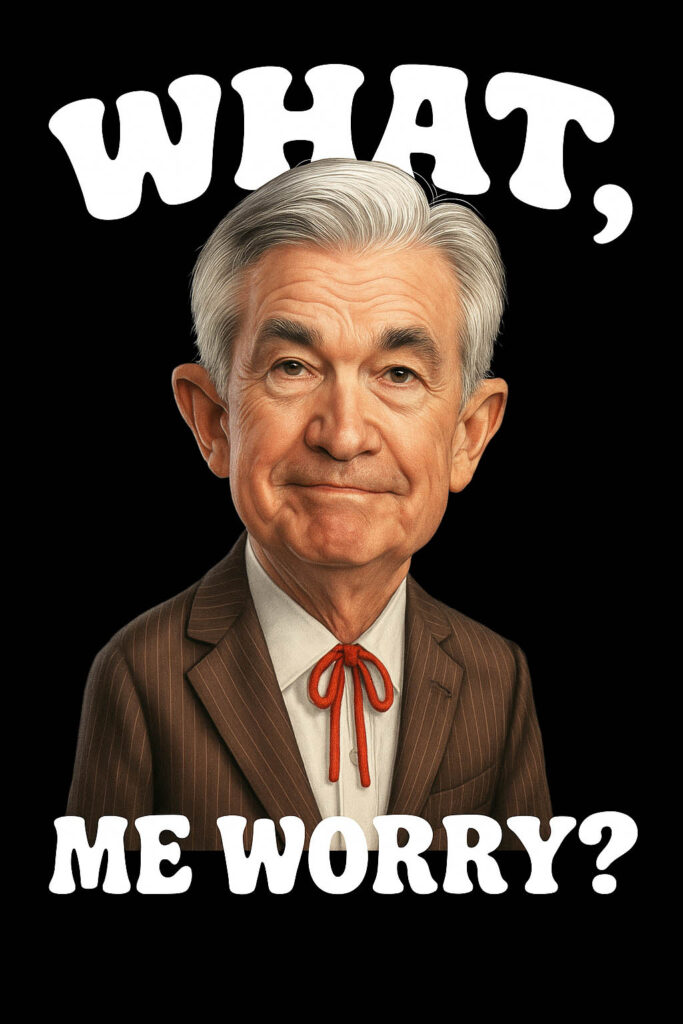
Who Really Controls the Economy?
As an unruly lad myself, I tend to look at this from an opposite point of view and “work my way back” to find the truth. Because our world is full of cognitive bias and highly subjective narratives – carefully positioned and refined over time.
But when you look under the “stones” within the financial system – you start to see patterns and cracks.
Here’s the pattern/cracks in our monetary system:
When banks create money for financial speculation…
…. they create asset bubbles, housing crises, and wealth concentration at the top.
When banks restrict money creation…
… it creates recessions, business failures, and foreclosures (which banks then buy at discount prices).
When governments need money…
… to stay alive, they must borrow from private institutions (like the Fed) and pay interest, even though those institutions create the money from nothing.
And to keep the economy growing…
… the financial system needs to continually feed its addiction and create more debt.
For further clues check out Professor Werner’s investigation of Japan’s “lost decade” and the book he wrote – it’s worth a read for those interested.
Werner discovered that central banks wield enormous undemocratic power while maintaining the lowest public profile. They operate as “second governments” pursuing political agendas without democratic accountability.
Sound familiar?
The Federal Reserve – a quasi-private institution – sets monetary policy that affects every American’s purchasing power, employment prospects, and savings. Yet most people can’t name the Fed Chair, let alone influence Fed policy through voting.
Meanwhile, elected officials who promise to “balance the budget” operate within a system designed to make government debt inevitable and perpetual.
“Daddy, Where Does Money Come From?”
“Sit down son, this may take a while…”
Before we continue – I’m not here peddling the mother of all conspiracy theories – that ain’t my jam.
I’m just trying to get you to challenge your paradigm and be open to thinking differently about the current financial situation the U.S. now finds itself in…
…cause both you and I are in it too whether we like it or not.
To be sure, there are a lot of smart money folks out there. If you look for them, you can find them – the best ones IMHO understand money and credit differently than the status quo.
They know that:
- Banks create money “out of nothing” when they make loans – no reserves needed
- 97% of our money supply is created by private commercial banks
- Our debt-based monetary system is not inevitable but a systematic choice
- Money scarcity is artificial
- Massive government debt is unnecessary
- Economic crises are not accidental; they are deliberate to flush the system so it can restart the debt creation cycle
- Our entire growth over the past 5 decades has been debt-based
While everyone else argues about government spending and interest rates, smart money understands that the real issue is who controls money creation and for what purposes.
This isn’t taught in schools because it would raise uncomfortable questions:
- Why is money creation privatized when it could be a public utility?
- Why must governments borrow money that banks create from nothing?
- Why is economic growth dependent on ever-increasing private debt?
- Who really benefits from the current system?
The answers threaten established power structures and “the system” itself.
As Werner noted, central banks have spread “false narratives” about money scarcity while producing “pseudo-scientific research” designed to deflect blame for poor economic performance.
I challenge you to decipher what the Fed Chair says after the upcoming meeting in September – lots of “gobblie-gook-mumbo-jumbo” that sounds super official, but now that you’re in on the joke here, you probably shouldn’t waste your time.
Perhaps the real conspiracy here is the systematic miseducation of the public about how money actually works.
What This Means for You (And Why It Matters)
Here’s the bottom line: The current monetary system is a massive wealth transfer mechanism disguised as economic necessity.
Banks create money from nothing, lend it at interest, and when inevitable crises occur, taxpayers bail them out while ordinary people lose homes, jobs, and savings.
This explains why:
- Housing prices have outpaced wages for decades
- Young people are priced out of homeownership
- Wealth inequality keeps expanding regardless of which party is in power
- Wage earners face persistent inflation and currency devaluation
- Taxpayers (that’s us!) pay interest on government debt to private banks for the money that was created from nothing
- Government debt grows regardless of fiscal policy
- The entire system is ever dependent on more and more debt creation
It’s not a bug in the system. It’s a design feature.
Consider…who benefits when this financial system persists:
- Commercial Banks: Create money and charge interest on it
- Central Banks: Wield enormous power and control with little oversight
- Financial Markets: Receive trillions in quantitative easing
- Wealthy Asset Holders: Benefit from persistent asset price inflation
What next?
I realize that this sounds all “doom and gloom” but really, I’m just hunting for the damn truth…cause I think both you and I could handle it, right?
One thing is for sure, I’m trying to figure this all out for myself.
Just know that our current system requires ever-expanding debt not because of economic laws, but because of political choices made decades ago that most people don’t even know exist.
Now you know. You can thank me later.
But if y’all think I’m full of hot air then do some of your own due diligence because the evidence is overwhelming, empirically verified, and hiding in plain sight in official central bank publications.
That’s why I always say keep your eyes and ears wide open folks – don’t just blindly accept everything you read or hear at face value.
It’s worth the time you’ll spend educating yourself on how this all works.
It’s the future, and most importantly, our kids’ future.
Unfortunately, the truth today is stranger than fiction.
So, stay unruly in your quest for eternal wisdom…
…it’s out there if you really want to find it.
P.S. Want to dive deeper into my research behind this article?
Primary sources:
- Bank of England Quarterly Bulletin 2014 Q1: “Money Creation in the Modern Economy”
- Federal Reserve: “The Fed Explained” (2021)
- Werner, R.A. (2014): “Can banks individually create money out of nothing? — The theories and the empirical evidence”
- Werner, R.A. (2003): “Princes of the Yen: Japan’s Central Bankers and the Transformation of the Economy”